
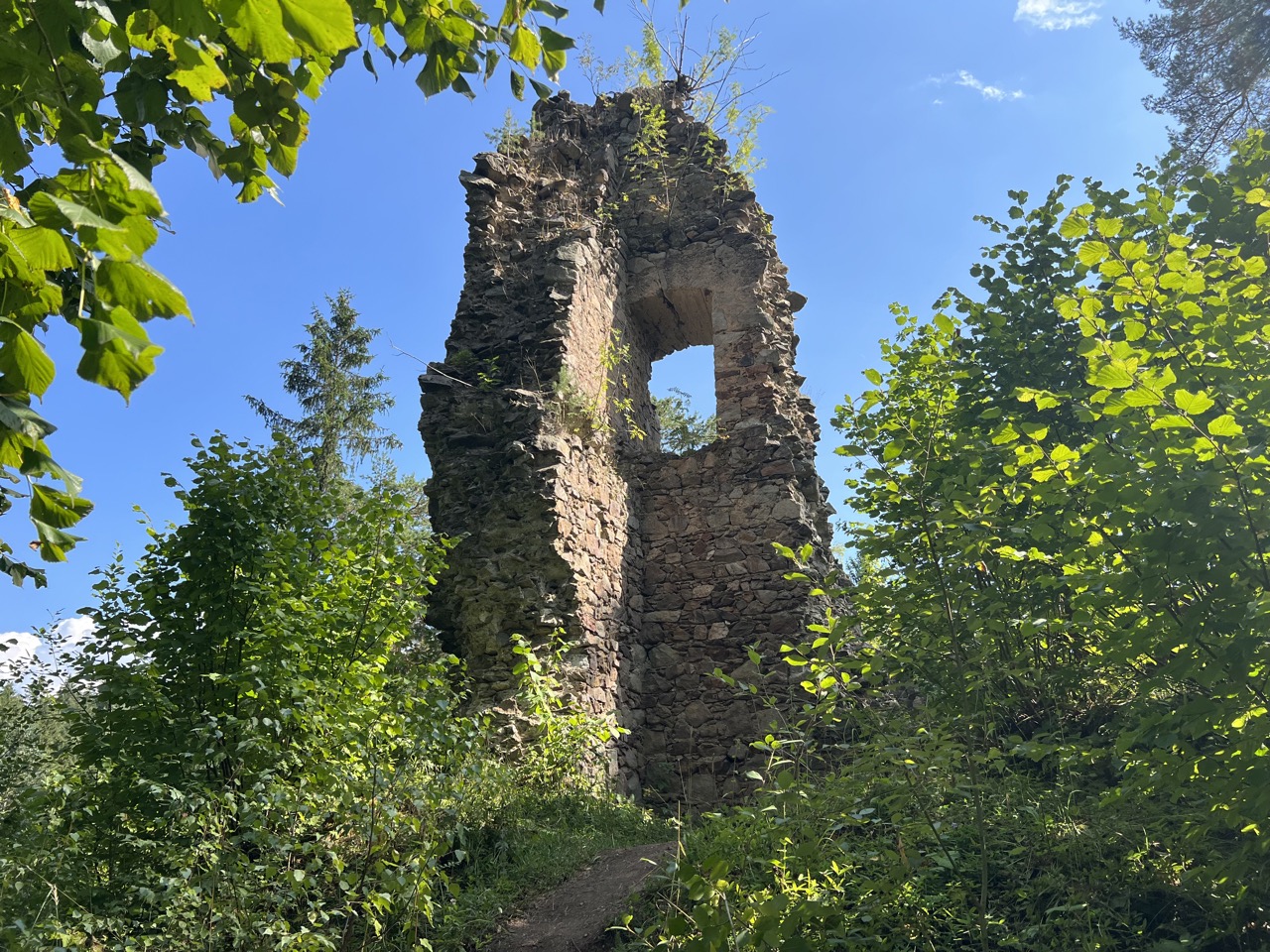
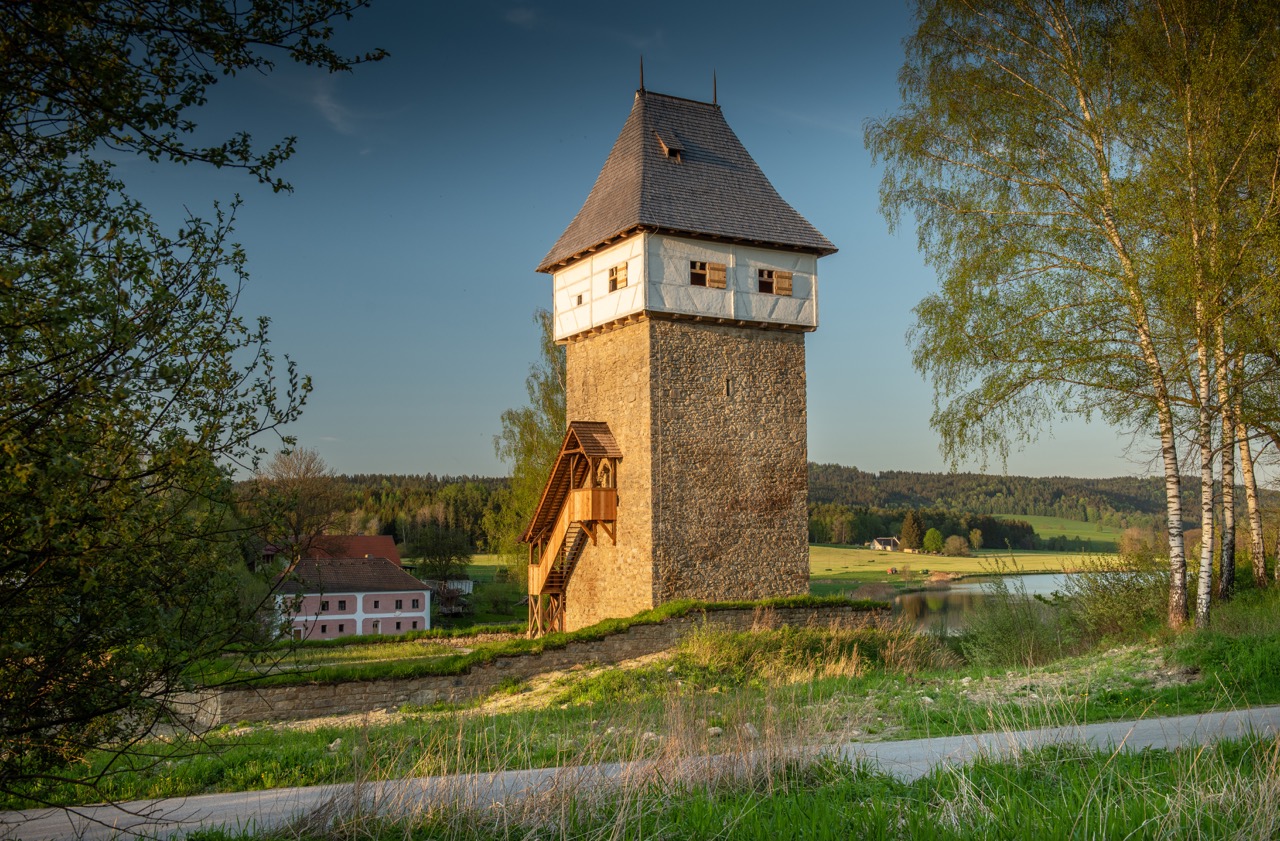
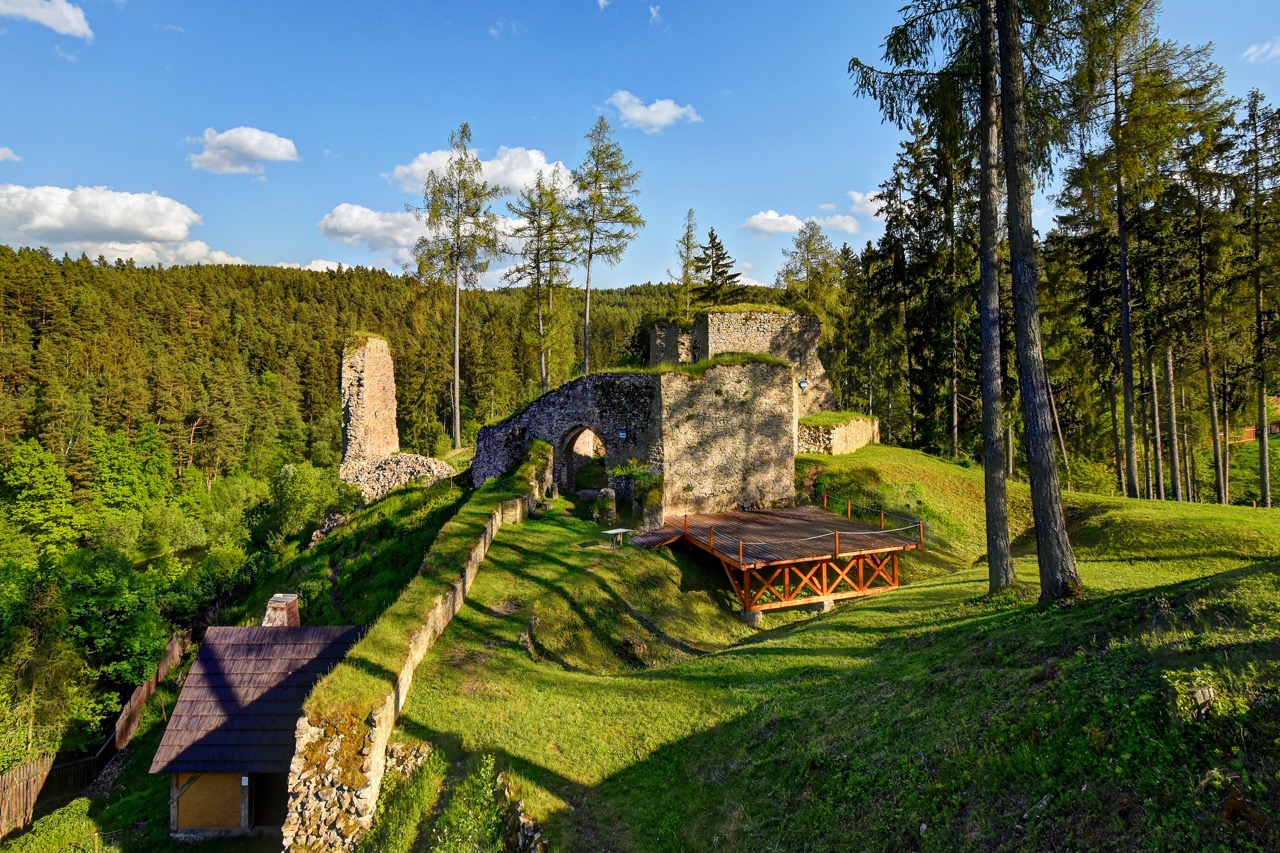
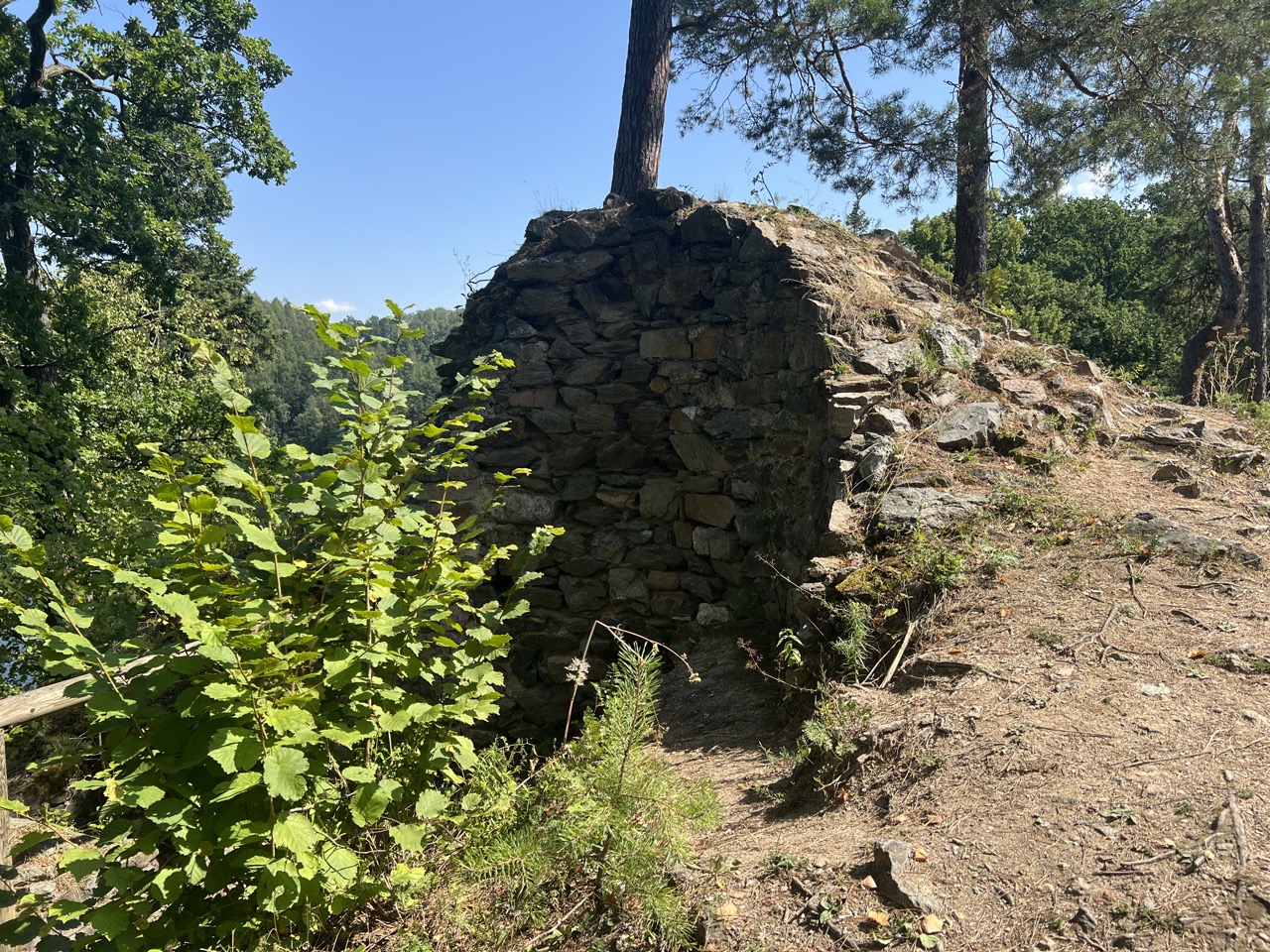
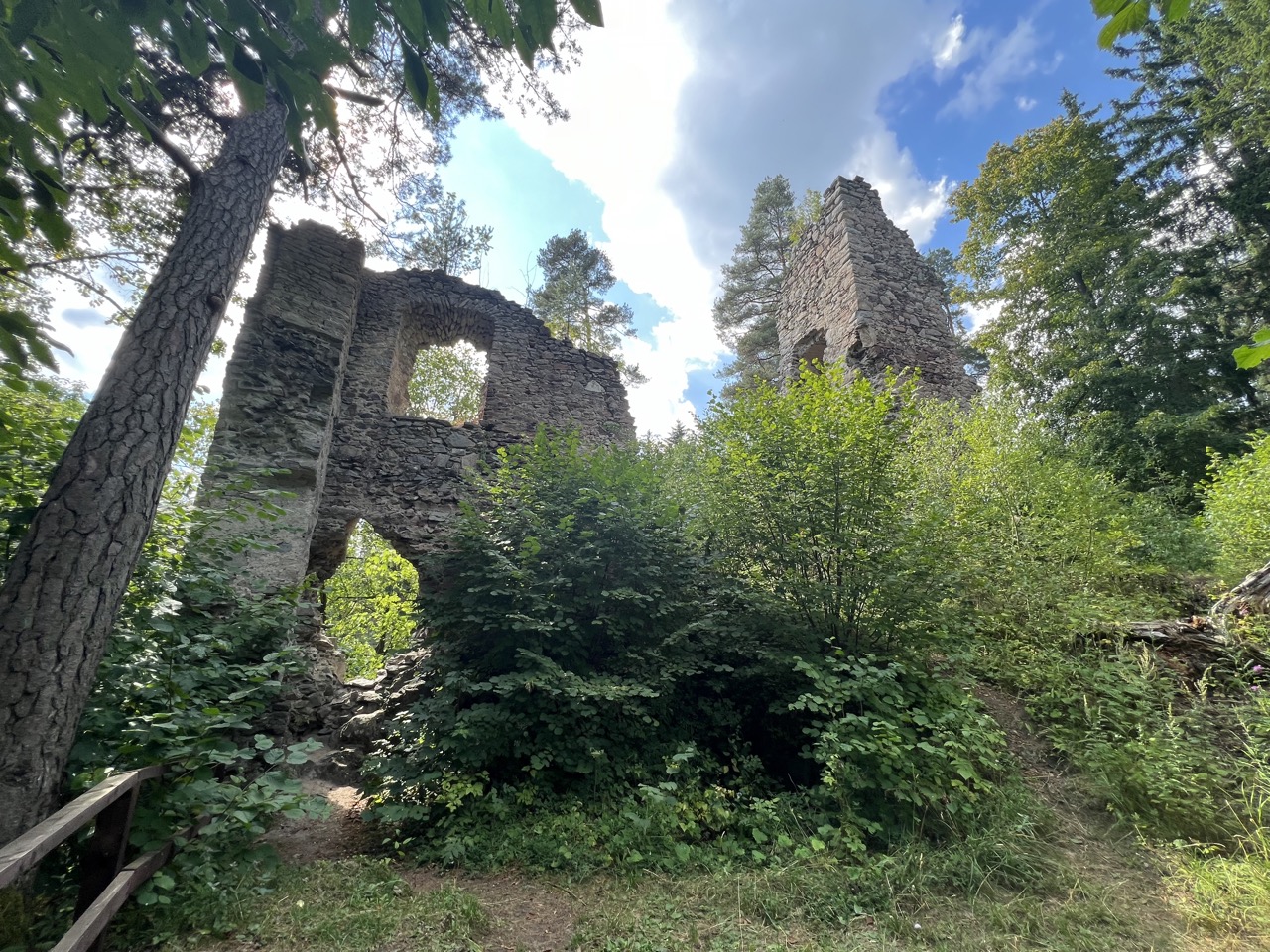
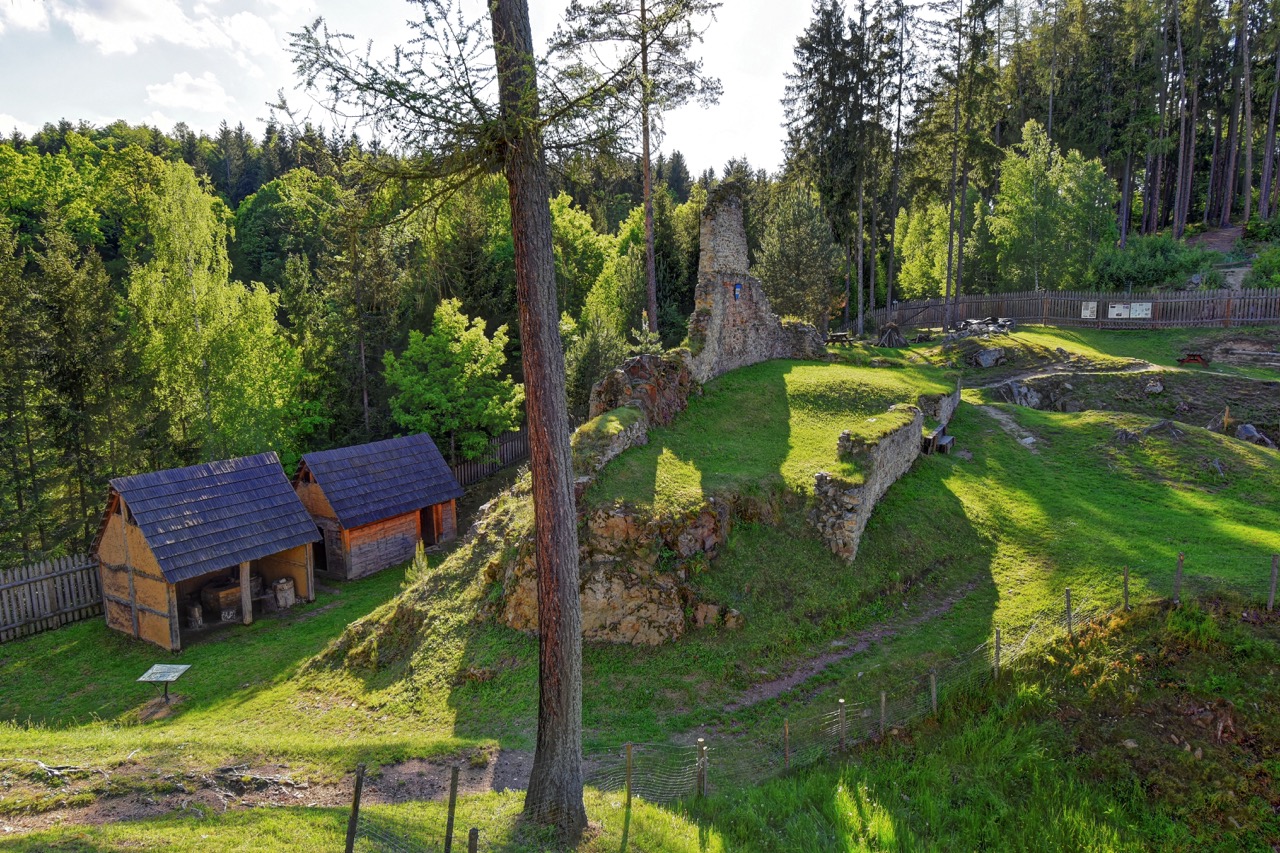
Ruins of this castle are jutting above the surrounding terrain on
a tongue of land above the river Malše close to a little town of Pořešín
in the region of Kaplice.
Most probably it is the Bavor family of Strakonice who had the castle
built in the very beginning of the 14th century. The first trace in
written history was marked by the year 1312. As soon as three years
later, Bavor of Strakonice traded the castle of Pořešín with Verner,
Racek and Přibík of Vitějovice. Their descendants, who were using Pořešín
in thein predicates, owned castle until 1423. Being a stray asset,
it moved into property of emperor Zikmund and after 1434 it was gained
by Oldřich of Rožmberk who, fearing it might become a possible hussite
support point, had it destroyed.
The core of the castle of Pořešín is a nice example of a sheathed rampart castle with the variety of sharp cranking of the rampart. This towerless castle type was really appreciated in the east and southeast neigbourhood of Bohemia.This is also where penetrated the Bohemia border in several cases. To be concrete, in the case of Pořešín it was most probably from the Lower Austria where such a style of rampart construction was commonly used.
Ruins of this castle occupy the end of a wider but rocky tongue of
land run around by the river Malše close to the town of Kaplice.
The beginnings of the castle are veiled by silence of written sources.
The first historicals references appear as late as at the end of the
14th century. We see it in possession of the lords of Maršovice from
1382. Jan of Malovice gained it after 1423. His three sons settled
the property on the mighty Oldřich of Rožmberk. He united it with his
domain of Nové Hrady. However, there was no use for the castle in scope
of the domain and probably it was left alone. A mention dating from
1541 describes it as desolate.
The interesting Louzek castle has been standing aside publicity and
as such remains insufficiently describes. In the first half of the
14th century, it was belonging to literally fashionable block formations
in which a residential toner and palace wings grow together into a
compact building block around a courtyard of a usually smaller tract.
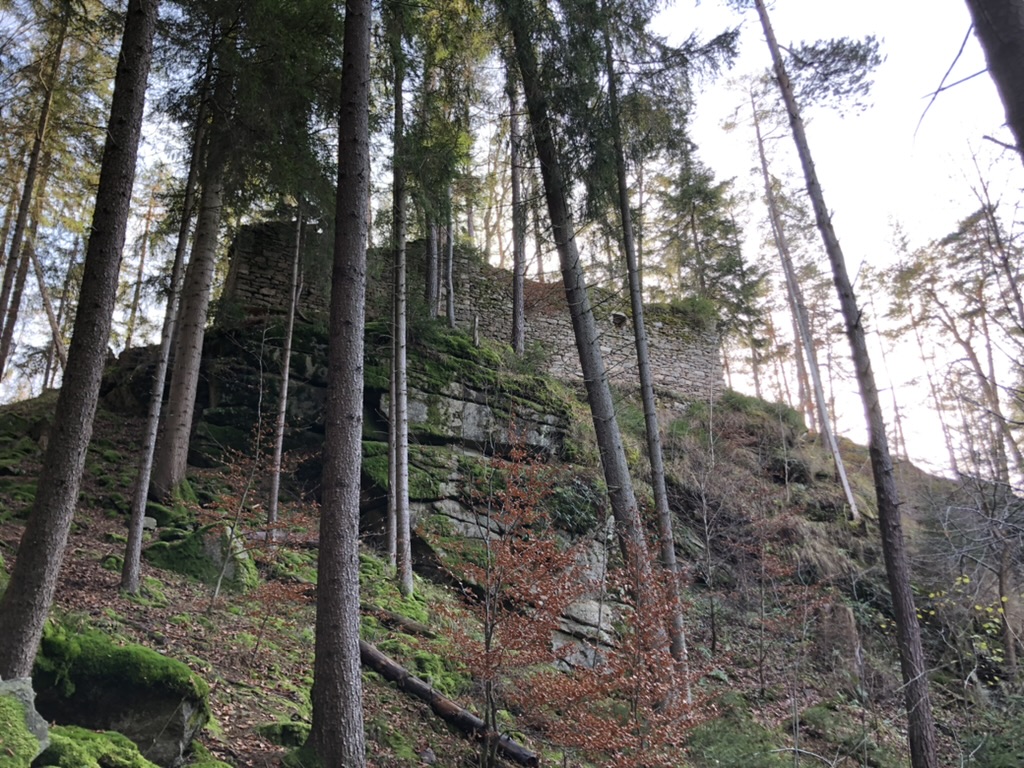
We can find ruins of this castle on a rocky tongue of land above the
Black brook close to Hradiště in the region of Kaplice.
Historical reports mentioning the castle in sources are very brief
and rare. We still have to guess to know who had it built. In the 15th
century, the Rožmberk family issued a falsified document which they
wanted to prove that in 1265 King Přemysl Otakar II
confirmed purchase
of the castle by Petr Vok of Rožmberk from Jonák of Vodice. It is the
year 1387 that with certainty speaks of the castle. At this occasion,
Beneš of Velešín sold it to Oldřich of Rožmberk. Thus, we can deduce
that the castle´s initial years were tied to lives of lords of Velešín.
Forming a part of large domains of Oldřich of Rožmberk, Sokolčí could
not play a significant role. It joined Nové Hrady and probably soon
lost its importance. Though so far scientifically almost completely neglected, the castle´s
appearance can be most probably estimated to be similar to those of
very fashinable block type castles of the first half of the 14th century.
Future research can bring to light many suprising facts, but we can
claim with high degree of likelihood that it was not sooner than in
the 14th century that it was built.
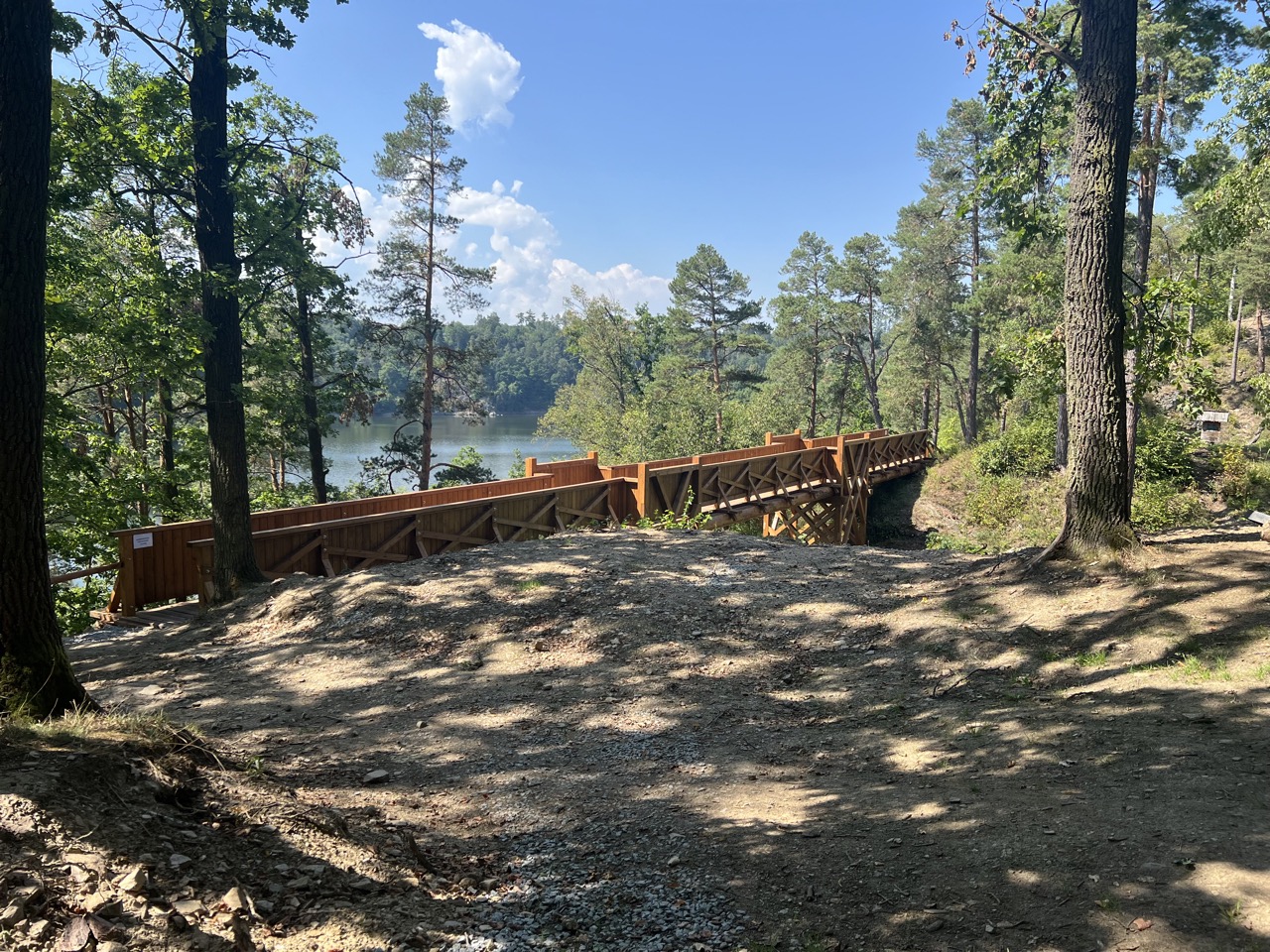
Ruins of the castle stand upon an elongated rocky crest run around
by the river Malše above its left hand bank facing the town Velešín
on the opposite bank. The terrain configuration is significantly changed
today. This results from the fact that the local valley has been flooted
by waters of a new dam of Velešín.
Velešín belongs to one of the oldest royal stone castles in the country.
Very soon it moved into the hands of Čéč of Budějovice, who is mentioned
in relation to the seat to the year 1266. Beneš Pyšný, an ancestor
of the lords of Michalovice, gained the castle from Čéč. According
to succesful recovery efforts of King Přemysl Otakar II, it returned
into the royal possesion, but his son King Václav II already gave it
back to the lords of Michalovice. In the 14th century, the castle was
shared by members of this family until 1387 when Oldřich of Rožmberk
purchased it. It stayed in the hands of his mighty family for a hundred
years and during the hussite wars it was relied upon as an important
power point of the Lords of the Rose. As the 15th century went by,
some static failures started to arise with stronger intensity and as
the repairs and maintenance of the castle were getting more and more
costly, Vok of Rožmberk decided to get rid of the decaying seat and
left it in 1487. It turned into a ruin very quickly and for the first
time it is described as desolate in a note dating from 1541.
Velešín belongs to extraordinarily important and significant sights.
Therefore, we must regret how fragmetary our knowledge of its appearance
and development is. There are no doubts that originally it represented
a type of a royal castle with perimetral build – up which kept probably
developing in the hands of powerful noble proprietors and maybe also
extended.